
Acadia Projected Versus Actual Release
DPS&C uses the exact phrase “projected release date (if applicable).” The telephone locator supplies that field after a state time computation is available. A projection is a forward-looking administrative calculation. The actual release is the recorded custody event after all valid credits, orders, holds, and processing have been applied.
A pretrial detainee does not have a sentence-based release date. Bond, a court order, dismissal, or another event may later authorize release, but a displayed bond amount is not a schedule. A sentenced parish prisoner may have a jail computation. A sentenced state prisoner uses DPS&C records even if physically housed in a parish jail. Legal custodian, physical location, and sentence type must remain separate.
A scheduled or projected date is not proof of release. Confirm the event through the jail, DPS&C status, supervision assignment, or formal release record.
Lookup Acadia Parish Release Dates
Start by determining whether the person is pretrial, serving a parish sentence, or serving a state-felony sentence. The correct office changes with that answer. If the record is unclear, use the court judgment and custody source before seeking a date.
- For a state sentence, call the DPS&C locator at 225-383-4580 with the department number or the full name and date of birth.
- Ask for the “projected release date (if applicable)” and whether the time computation is complete.
- Use Louisiana VINE to read current custody or active supervision, but do not treat every supplied date as an actual event.
- For a parish sentence, request the judgment, credit-for-time-served information, offense date and class, and the APSO jail computation.
- For a pretrial booking, follow the court order, bond status, release record, and any outside holds rather than expecting a fixed sentence date.
- Confirm the actual event after the projection with the releasing agency or a custody-change alert.
The Acadia Parish release record and search path covers the final event and destination. A release-date lookup answers the narrower forward-looking question.
Louisiana Projection for Acadia Sentences
The DPS&C inmate-information page says the locator can return housing assignment, facility address and phone, and the projected release date when applicable. The automated system may also identify the assigned Probation and Parole district. LAVNS is described as updating every 24 hours, yet it is not presented as a historic discharge database.
The sentencing court must send paperwork before DPS&C can complete a new calculation. An unavailable projection may mean the computation is pending. It does not necessarily mean the sentence has no end. The Master Prison Record is the central agency record for sentence and time computation.
The official locator explanation below documents the exact projected-date field and telephone route.
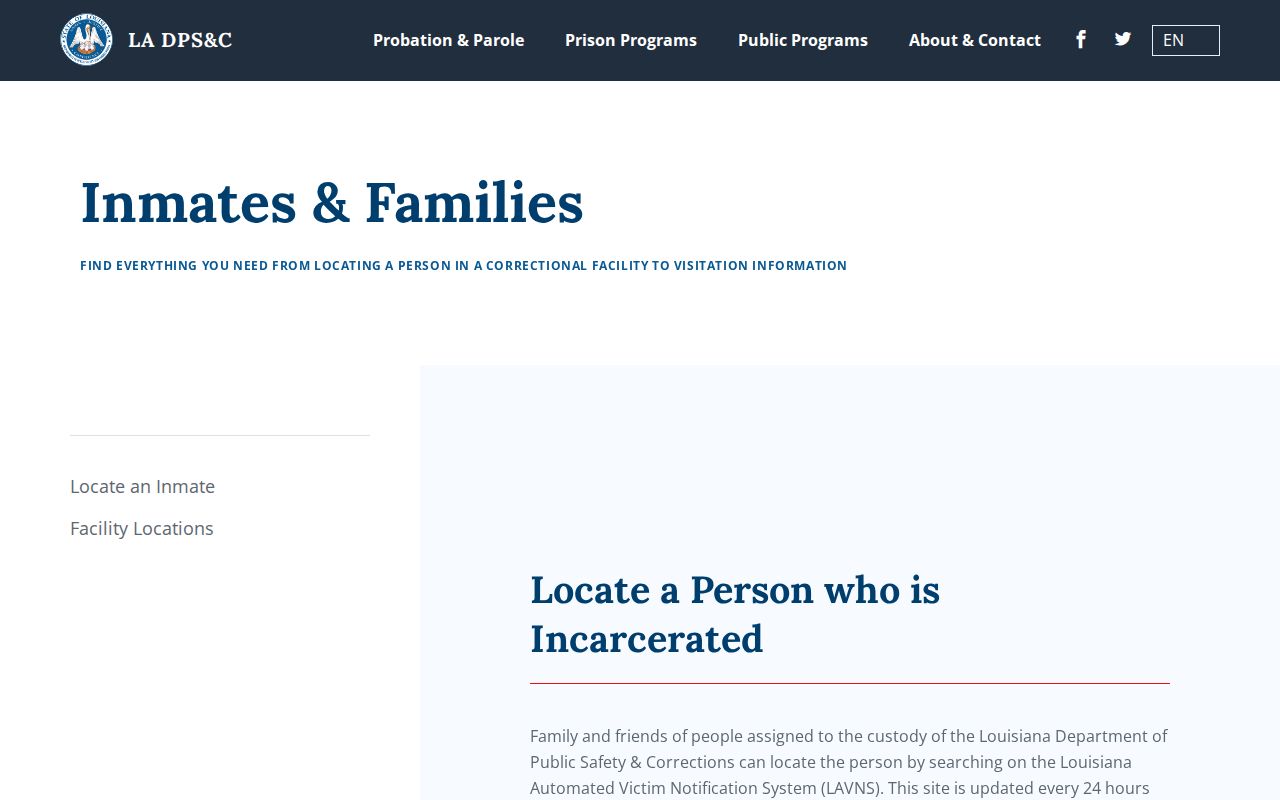
The field belongs to a state calculation. A local APSO calendar release result instead records an event that has already been entered.
Acadia Release Law Changes by Date
Louisiana's August 1, 2024 offense-date split is the key computation rule. For offenses committed on or after that date, R.S. 15:571.3.1 permits an eligible felony offender in parish prison or DPS&C custody to earn diminution up to 15 percent of the imposed sentence. The simplest maximum-credit arithmetic resembles 85 percent served, but it is not a universal promise.
Sex offenses under R.S. 15:541 and habitual-offender sentences under R.S. 15:529.1 are excluded from that section. Pre-sentence credit does not earn good time under it. Program credit has separate conditions, credits can be forfeited, and the secretary determines earning. A qualifying diminution release generally carries unsupervised parole for the remainder, while a split sentence can begin probation.
Earlier offenses remain under R.S. 15:571.3. That law contains different parish and DPS&C cohorts and rates. The parish provision generally allows eligible prisoners 30 days diminution per 30 actual days, while a first crime of violence uses three days per 17. Other identified state cohorts use different ratios. Offense date, sentence category, prior history, and exclusions control. Never apply one rate without the current law and actual sentence record.
Why Acadia Release Dates Change
A projected release date changes when the inputs or legal rules change. Some factors move the date earlier, while others move it later or prevent community release at the expected point. The official computation, not private arithmetic, decides the effect.
| Factor | Possible effect | Record to check |
|---|---|---|
| Sentencing paperwork | Projection may be pending or revised after receipt | Judgment and Master Prison Record |
| Credit for prior custody | Changes credited time but follows legal rules | Court order and computation |
| Consecutive or concurrent terms | Changes aggregate sentence structure | Signed sentence and DPS&C record |
| Earned credit or forfeiture | Can advance or delay the projected point | Official time computation |
| Discipline | May cause loss of credit where law permits | Facility and computation record |
| Amended court order | Can change the underlying sentence | Current court minutes and agency recalculation |
| Detainer or transfer | Can end one custody while another begins | Release destination and receiving agency |
Parole also requires careful wording. An eligibility date, hearing date, or grant is not the physical release date. Conditions, release planning, later orders, or another hold may intervene.
Acadia Parish Jail Time Computation
For a parish sentence, collect the judgment, offense date, offense class, and credit-for-time-served information. Ask APSO for the jail's computation because Louisiana's parish provision gives the sheriff or superintendent authority over earning. The research found no public Acadia jail good-time regulation or calculator, so no local date should be estimated from a statewide summary.
A person with a state-felony sentence can be physically housed in a parish facility while remaining in DPS&C legal custody. That person uses the state computation and correction path. By contrast, a local pretrial detainee has no sentence-based projection. Court and jail records, bond completion, and holds decide the next event.
- Projected date
- The agency's current forward-looking calculation.
- Actual release
- The recorded event when a custodian ends that custody.
- Diminution
- A reduction in time served through credit allowed by law.
- Full-term date
- The sentence endpoint before or after a period of release supervision, as the governing record specifies.
Correct an Acadia Release Calculation
For a disputed state calculation, the affected person's Master Prison Record is central. A person in a state facility writes the facility Records Office. A state-felony prisoner housed locally uses the Administrative Remedy Process, according to the DPS&C FAQ. The time-computation line is 225-342-0799.
The DPS&C time-computation guidance below explains the record and correction routes.
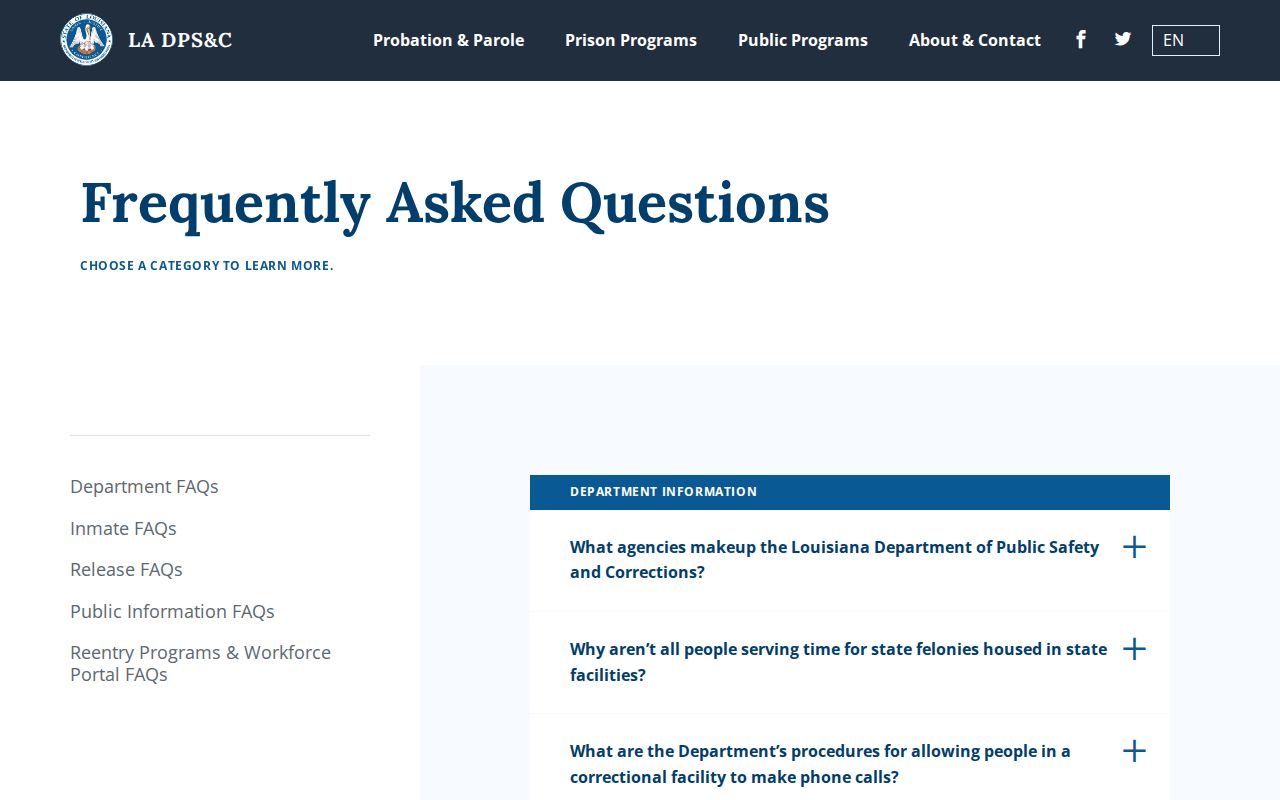
Public information can identify the correct channel, but it cannot recalculate a sentence or resolve legal eligibility for an individual.
Provide the department number, judgment, disputed credit or date, and the specific correction requested. Avoid a general claim that the arithmetic “must” produce a certain result. Different offense dates, exclusions, sentence structures, and forfeiture rules can yield different lawful calculations.
Acadia Release Dates and Supervision
Under R.S. 15:571.5, older-law diminution release can operate as parole, with a certificate and conditions. A projected good-time date may therefore begin a supervision phase rather than mark full discharge. Violation and revocation can later return the person to custody.
Probation is different. It can arise from a suspended or split sentence and does not necessarily prove a prison release. Use the judgment and Lafayette District P&P routing for Acadia supervision. The Acadia Parish Post-Release Supervision page explains how parole, probation, and discharge records fit together.
Confirm the Acadia Release Event
After the projected day arrives, check the current custody status and the releasing agency's record. Louisiana VINE can provide a custody-change alert, but alerts reflect contributing-agency data and can lag. APSO's Release Date filter applies to parish bookings. DPS&C status, a P&P assignment, or a formal release certificate applies to state custody.
A passed projection is not enough. Credits may have been forfeited, a warrant or amended order may exist, or the person may have transferred to another custodian. Record the date and source checked. When proof matters, request the current release or discharge record from the originating agency.
Note: Confirm an actual event with the custodian even when an old projected date now appears in the past.
Acadia Release Date Evidence
Use evidence that matches the claim. For a future state date, record the DPS&C locator result and the date it was retrieved, then describe it as projected. For a completed state release, use the custody-status change, release certificate, or new P&P assignment. For an APSO booking, the portal's Release Date establishes that the Sheriff system closed that booking on a calendar date, while the jail summary can add the exact time and release type. For a court-controlled event, the signed judgment or minute explains legal authority but may not show when physical processing ended.
The destination is a separate part of the evidence. A person released from Acadia Parish custody may have entered the community, transferred to DPS&C, moved to another jail, or entered ICE or USMS custody. If the release record lists a receiving agency, follow that agency's locator or record. A transfer date should never be presented as freedom from all custody.
Keep a short search log with the name or agency identifier used, source, retrieval date, reported field, and any direct confirmation. If no public record appears, state “not publicly located” and use the narrow request route. Sealing, expungement, final discharge, spelling, delayed feeds, or limited coverage can all produce an empty result without proving that no custody or release record exists.
For a written request, identify the precise record sought. A DPS&C release certificate, Master Prison Record, supervision discharge, and annual statutory release report answer different questions. Give the department number, full name and date of birth, facility if known, and the field or event needed. A broad request for “release information” can return an incomplete response because it does not distinguish a future computation from a completed discharge.